

- The cash rate was increased today to 4.85%.
- This is the highest the cash rate has been since 2008.
- Today’s increase will result in lower borrowing capacities.
- A couple earning $215k could see a total decrease of $136,000 since January.
Following annual headline inflation data last week that came in at 4.3% (above the target range of 2-3%), the Reserve Bank of Australia (RBA) has decided to increase the cash rate to 4.85%. This is the fifth increase this year and puts rates to the highest level since the GFC in 2008. Households have been forced to absorb a full 1 percentage point increase before today, with this move adding another 0.25.
Following the cash rate increase in September we spoke about the impacts on home loan repayments. Another major impact the cash rate can have is on borrowing power.
How does the cash rate impact borrowing power?
When calculating how much they will lend to you, lenders consider a combination of factors. These include your income, deposit, expenses, credit score, property you are buying and the interest rate. When the cash rate moves, variable interest rates generally move with it. Increases to the cash rate, and therefore interest rates, make repayments higher, which reduces the amount a lender may be willing to lend you.
How much can a cash rate increase impact borrowing power?
The exact amount the increase will have on your borrowing power depends on your specific situation. But to provide an idea, let’s consider the below scenario.
Jim and Shannon have a household annual gross income of $215,000. They have no dependents and no car loans or credit cards. At the start of the year, when interest rates were around 5.25% p.a., they could borrow around $1,275,000. Last week, following four interest rate increases, their borrowing capacity had dropped by $111,000. Following today’s increase, it is likely their borrowing capacity will fall another $25,000, bringing it to around $1,139,000.
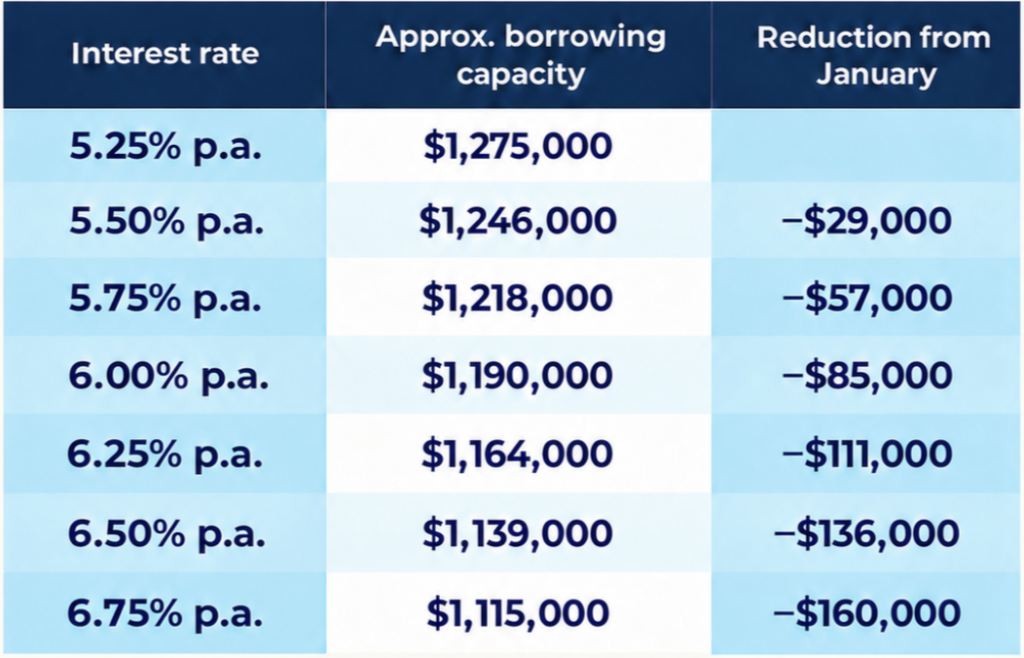
Assuming no dependents and using the average Australian annual expenses with a 30-year loan term. This calculation is for illustrative purposes only. Speak to your broker for a more complete calculation for you.
What can you do to increase your borrowing power?
While the cash rate is outside our control, there are steps you can take to improve your borrowing capacity. These include:
Check your credit report: you can request a copy of your credit report from companies such as Equifax or Experian. Check this closely to ensure everything is correct. If there is anything that doesn’t look right, report it with the credit provider or reporting body.
Reduce your expenses: lenders look at your spending habits. Reducing your expenses can help increase the amount they are willing to lend you.
Pay bills on time: late payments can negatively impact your credit score.
Consider additional income: working a side hustle or establishing another regular line of income can make a difference to your borrowing power.
Consider paying off debts: reducing your debts where reasonable removes the repayments coming from your account, which could boost your borrowing capacity.
-> Next read: 10 ways to increase your borrowing power
The right strategy to increase your borrowing capacity depends on your unique situation. Reach out for a free chat to understand what your current borrowing power is and what strategies could work to help give you a boost.
A chat with your broker is free. Find a broker near you to set up a conversation about your options.
Find a Loan Market broker near you to get started.