How much deposit do you need for a property in Melbourne

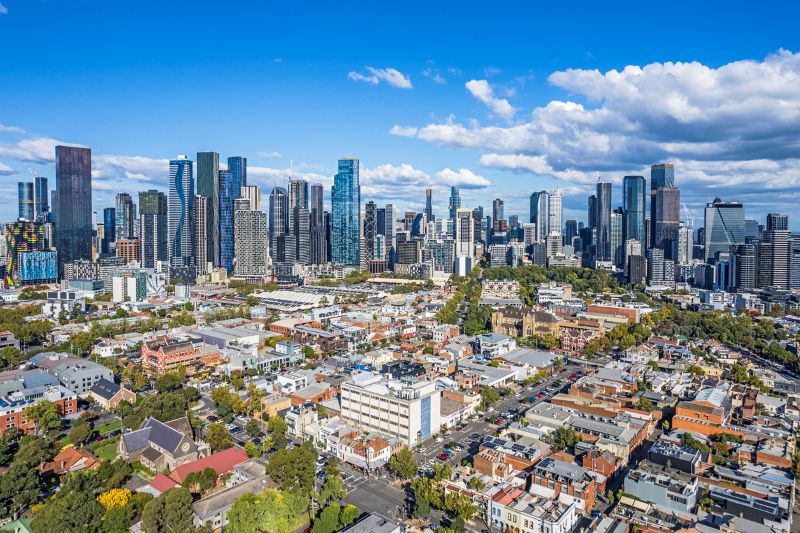
Aerial view of Melbourne's growing wide cluster of CBD skyscrapers taken from North Melbourne showing the contrast of old and new architecture in the foreground. Tree-lined streets low-rise buildings and parklands in established older suburb.
Short on time? Here’s a quick summary:
  • Victorian stamp duty requires planning: land transfer duty generally needs to be saved on top of your home deposit, as it is usually paid from your own funds at settlement
  • A 20% deposit usually avoids LMI: smaller deposits could potentially help you enter the market sooner, although lender’s mortgage insurance generally applies without eligible scheme support
  • Options exist for smaller savings: family guarantees and government schemes may help reduce the upfront cash you need, subject to eligibility.

Saving a deposit for a Melbourne property is only part of the cost of buying. The size of your deposit could affect how much you borrow, whether lenders mortgage insurance (LMI) applies and which home loans may be available to you. Stamp duty and other purchase costs generally need to be covered too.

How the current market affects your deposit for a Melbourne property

Melbourne home values have eased over the past year, although the amount buyers need to save still varies considerably by property type and location. The median dwelling value was $786,718 as at 31 August 2026, according to Cotality’s Home Value Index. Your loan structure and any concessions you qualify for will also affect how much you need.

Values fell 4.7% over the 12 months to August and now sit 6.8% below their March 2022 peak, with Cotality noting that longer selling times could give buyers more scope to negotiate. Houses recorded a median value of $920,432, while units came in at $629,054. Median values are estimates that shift each month, so treat them as a guide only.

Prices also vary widely from one part of the city to another, with Cotality recording median dwelling values of $685,275 in Wyndham, $658,943 in the Melton and Bacchus Marsh area and $725,708 in Sunbury. That gap matters. A buyer targeting the outer west or north could potentially need a much smaller deposit than someone shopping for a house closer to the CBD.

Comparing Melbourne deposit scenarios at 5%, 10% and 20%

A larger deposit usually means a smaller loan and, all else being equal, lower repayments, while also reducing the likelihood of paying LMI. A smaller deposit could potentially help you buy sooner, although borrowing more can increase your interest costs and LMI may also apply. The table below models a $900,000 purchase, which sits just under Melbourne’s median house value.


5% deposit

10% deposit

20% deposit

Purchase price

$900,000

$900,000

$900,000

Deposit

$45,000

$90,000

$180,000

Loan amount

$855,000

$810,000

$720,000

Loan-to-value ratio (LVR)

95%

90%

80%

LMI

Generally applies unless an eligible scheme or guarantor arrangement is used

Generally applies

Generally not required

Estimated stamp duty

$49,070

$49,070

$49,070

Deposit + estimated stamp duty (excluding other costs)

$94,070

$139,070

$229,070


Source: Stamp duty estimated using State Revenue Office Victoria general land transfer duty rates. LMI and other upfront costs vary by lender and individual circumstances.

Stamp duty in the table is based on State Revenue Office Victoria general rates. The first home buyer duty exemption or concession does not apply where the property’s dutiable value is $900,000 because the current $750,000 eligibility ceiling has been exceeded. With a 5% deposit in Melbourne, LMI generally applies without eligible scheme support. A 10% deposit in Melbourne will usually still attract LMI. Reaching a 20% deposit in Melbourne generally removes the need for LMI and may widen your choice of lenders.

Deciding how much deposit for a Melbourne home purchase is enough often comes down to timing as much as savings.

“Waiting until you’ve saved 20% isn’t automatically the right option, because buyers also need to weigh up how long it will take them to save the extra money against the cost of borrowing with a smaller deposit,” said Ryan Kniese of Loan Market Rowville.

How Victorian land transfer duty and extra costs add to your deposit

Land transfer duty (stamp duty) is usually one of the largest upfront costs of buying in Melbourne. It generally needs to be paid from your own savings, on top of your deposit. Eligible first home buyers may pay less or nothing at all on lower-priced homes.

Under the first home buyer duty exemption or concession, eligible buyers pay no duty on homes with a dutiable value up to $600,000, while a sliding concession applies between $600,001 and $750,000. Duty is assessed on the price paid or the property’s market value, whichever is greater, and the first home buyer concession no longer applies above $750,000. Melbourne’s median unit value of $629,054 falls within this concession band, although eligibility depends on the individual property and buyer.

Beyond duty, buyers generally need to budget for other upfront costs, including conveyancing or legal fees, building and pest inspections and registration fees. These costs vary depending on the property and services required. Small costs add up. Factoring them into your savings target alongside your deposit and any land transfer duty could potentially help you avoid a funding gap before settlement.

Ways to buy in Melbourne sooner with a smaller deposit

Government schemes and family guarantees could potentially help you buy in Melbourne with less than a 20% deposit. Each option has its own eligibility rules and trade-offs.

Under the Australian Government 5% Deposit Scheme, the government guarantees part of an eligible first home buyer’s loan, allowing participating lenders to offer loans with deposits as low as 5% without LMI. The property price cap for Melbourne is $950,000. The Victorian Government also offers a $10,000 First Home Owner Grant for eligible new homes valued up to $750,000.

A guarantor home loan lets a family member use equity in their own property as extra security for your loan, which could potentially allow you to borrow more than 80% of the property’s value without paying LMI. The guarantor takes on real risk. Anyone considering this structure may want to seek independent legal and financial advice first.

Combining support options can make a noticeable difference to upfront costs. “There can be more than one pathway for a first home buyer with a smaller deposit, so it’s worth checking the schemes and loan structures available before assuming you need to save 20%. The right option still depends on the buyer, the property and the lender’s assessment,” said Reet Gill of Loan Market Gill & Associates in Coolaroo.

Ready to take the next step in Melbourne?

The right deposit isn’t necessarily the largest one you can save. Deposits of 5%, 10% and 20% each have different implications for your loan size, LMI and upfront costs, while government schemes or a family guarantee could potentially change the amount you need to contribute yourself. Comparing all three side by side can make the trade-offs easier to see.

Working out how much deposit you need is a major step toward owning property in Melbourne, and the right figure depends on your target price, loan structure and eligibility for concessions. A Loan Market broker can review your target property, check your eligibility for Victorian concessions and present clear options. To map out your upfront costs and compare your Melbourne deposit scenarios, contact a Loan Market broker today.

Frequently asked questions

Can I buy a Melbourne apartment with a 5% deposit?

It could be possible, subject to lender eligibility. Melbourne’s median unit value was $629,054 in August 2026, below the $950,000 price cap for the 5% Deposit Scheme, which is available to eligible first home buyers. Some lenders apply stricter rules to small or high-density apartments, which may mean a larger deposit is required. Checking a lender’s apartment policy early could potentially save time and avoid surprises.

How much deposit for a Melbourne home do you need once VIC stamp duty is factored in?

Stamp duty is generally paid from your own savings at settlement, so it increases the total cash you need upfront. On a $900,000 purchase at general rates, duty is estimated at $49,070. Eligible first home buyers pay no duty on homes with a dutiable value up to $600,000 and reduced duty up to $750,000. Factoring duty in from the start may help you avoid a shortfall later.

Is LMI tax deductible for Melbourne property investors?

LMI on an investment property loan is generally treated as a borrowing expense by the Australian Taxation Office. Borrowing expenses over $100 are usually claimed over the first five years of the loan, or the loan term if it is shorter. LMI on a home you live in is not generally deductible. A registered tax agent can confirm how the rules apply to your situation.

How much deposit for a Melbourne property do I need to avoid LMI?

Most lenders generally require a 20% deposit to avoid LMI, which works out to $180,000 on a $900,000 home. Eligible first home buyers using the 5% Deposit Scheme may be able to avoid LMI with a smaller deposit. A guarantor home loan could potentially achieve a similar result, subject to lender eligibility.

What costs should I save for besides my Melbourne home deposit?

Depending on the purchase, you may need funds for land transfer duty, conveyancing or legal fees, building and pest inspections and registration fees. These costs generally sit on top of your deposit rather than coming out of it. Setting them aside early could potentially help you avoid a shortfall close to settlement.

Keep exploring